Paphos was formally an old fishing village & one of the most beautiful and ancient towns of
Cyprus, in Hellenic and Roman times was the capital of Cyprus; today its a bustling modern
harbour town. Throughout the area there is a glorious history which dates back thousands of
years.
The newer part of the town is known as "Kato Paphos" which is the tourist area; here
you will find a huge array open air cafes and local taverns where you can sample a meze, bars,
nightclubs and shops. You will also find a lovely harbour with waterfront cafes and tavernas.
The Old Town of Paphos is set mainly on a hill overlooking the port and sea, there is a maze of
narrow winding streets.
Aphrodite
Petra Tou Romiou
Birthplace of Aphrodite, 25km East from Paphos. According to legend, Aphrodite mythological goddess
of love and beauty, rose from the waves in this strikingly beautiful spot. The Greek name, Petra tou
Romiou " THE ROCK OF THE GREEK " is associated with the legendary frontier-guard of
Byzantine times Digenis Akritas, who kept the marauding Saracens at bay with amazing strength. It is
said that he heaved this large rock into the sea destroying the enemies ship. A visit during Sunset
is strongly recommended !
Sanctuary of Aphrodite
Kouklia village,14 km east of Pafos was one of the most celebrated pilgrimage centres of the ancient
Greek world, and once city-kingdom of Cyprus. Here stood the famous Sanctuary of Aphrodite, the most
ancient remains of which date back to the 12th century BC. The glorious days of the sanctuary lasted
till the 3rd-4th century. The museum, housed in the Lusignan Manor, contains many interesting finds
from the area, and excavations continue on the site of the sanctuary, the city and the
necropolis.
The Baths of Aphrodite
Located at Polis and the 'Fontana Amorosa' - Fountain of Love - also echo her apparent penchant for
the island.
Lempa
5 kilometers from Paphos, Lempa village can be singled out as one with historic significance. In its
pretty setting near the sea. Today the faithful reconstruction of several dwellings, gives an
insight into chalcolithic life on the island. Near the site replicas of two houses from this period
have been constructed.
Paphos district archaeological Museums
Archaeological Park
In Kato Paphos, near the harbour - Open Mon-Sun 0730-1700
The inclusion of the Kato Paphos archaeological area in the World Heritage List in the 1980s ignited
the idea of a General Plan whose main aim was the preservation and maintenance of the archaeological
remains and to provide information to visitors. Artifacts from the middle Ages can be found in
abundance, monuments are :-
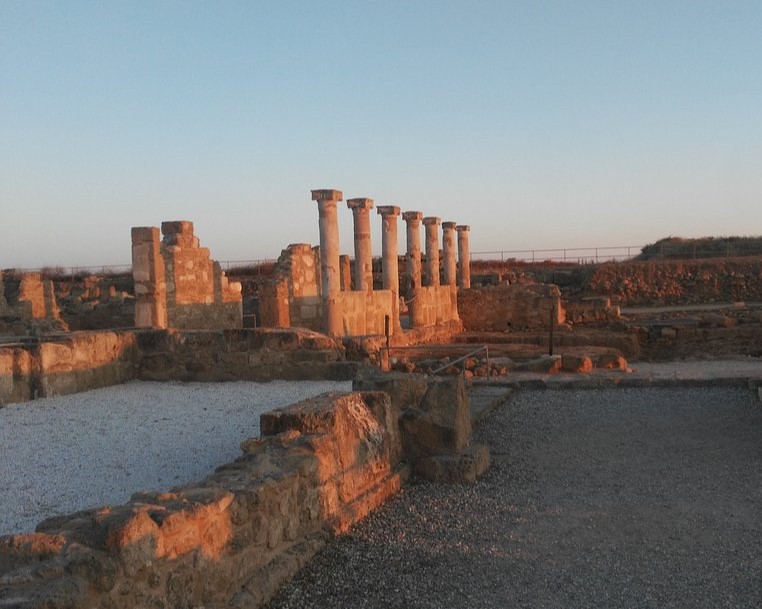
The House of Mosaics
House of Dionysos, House of Theseus and House of Aion: The mosaic villas floors dated back to the
3rd and 5th century AD are considered among the finest in the Eastern Mediterranean. The mosaics
mainly depict scenes from Greek mythology.
Paphos Odeon
A small 2nd century Odeon built entirely of well-hewn limestone blocks, it is now used in the summer
for musical and theatrical performances. Nearby are the remains of the ancient city walls, the Roman
Agora and a building dedicated to Asklipeios, god of medicine.
Saranta Kolones
Built by the Lusignans at the beginning of the early 13th century on the site of a previous
Byzantine castle. It was destroyed by an earthquake 1922.
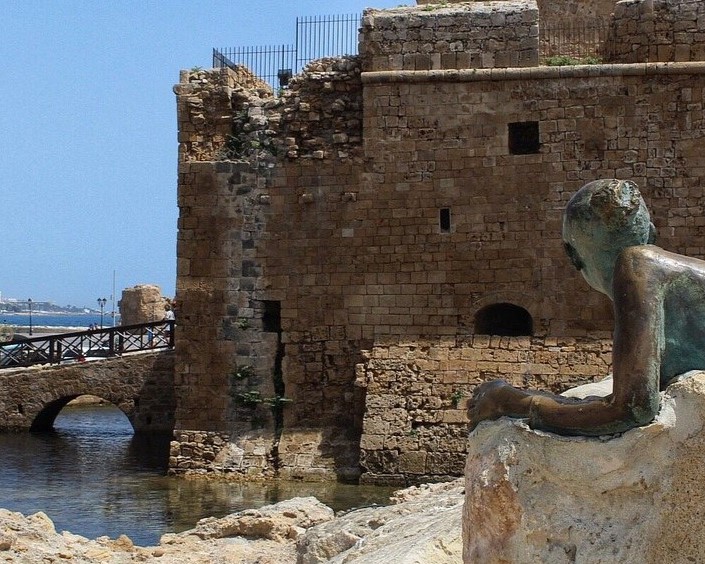
Paphos Medieval Fort
Paphos Harbour - Open Mon-Sun 0730-1700
The castle / fort built in the harbour area of Pafos by the Lusignans at the beginning of the l3th
century, on the site of a previous Byzantine Castle. It was destroyed by an earthquake in 1222. Kato
Pafos harbour originally a Byzantine fort built to protect the harbour, it was rebuilt by the
Lusignans in the l3th century, dismantled by the Venetians in 1570 and rebuilt by the Ottomans after
they captured the island in the 16th century.
The museum hosts an attractive collection of objects from the Byzantine period including Byzantine
icons from the 7th to 18th centuries, and the oldest icon found yet in Cyprus of the 7th or 8th
century.
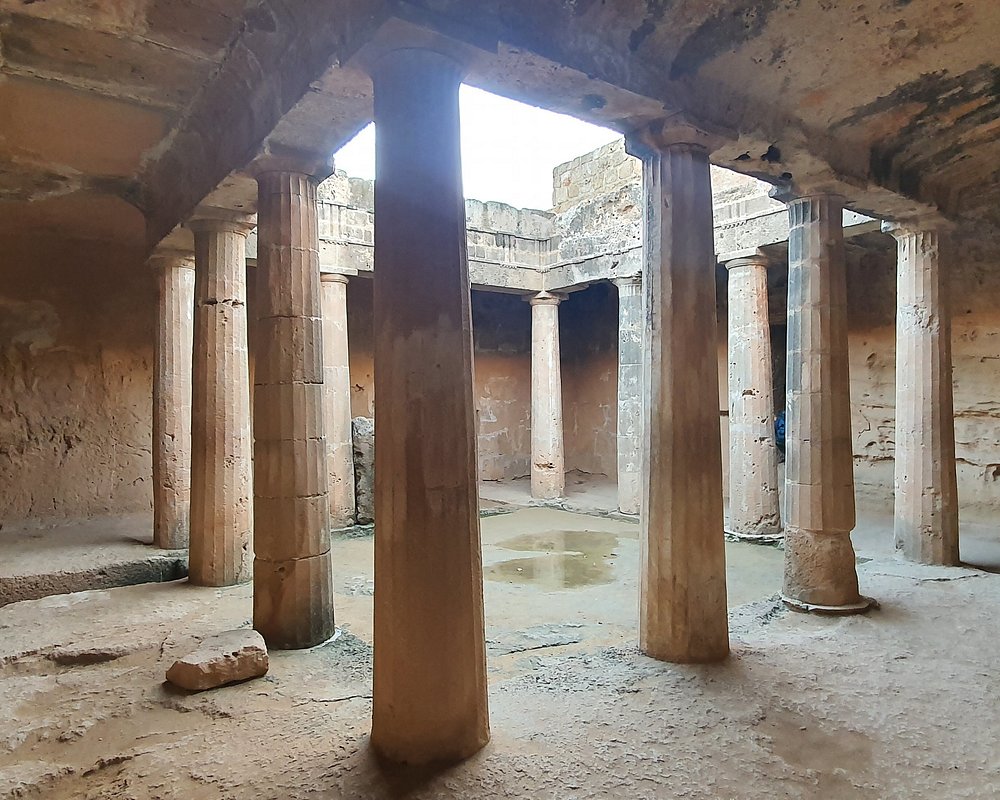
Tombs of the Kings
Open Mon-Sun 0730-1700
These impressive underground tombs date back to the 4th century B.C. They are carved out of solid
rock and spread over a vast area, some decorated with Doric pillars. High officials rather than
Kings were buried here.
Churches
Another 'first' for Paphos was its early recognition of Christianity. While under Roman rule in 45
A.D., it was here that Saint Paul converted the first ruler to the faith.
Agai Solomoni Church
Kato Paphos
Originally a Christian catacomb retaining 12th century frescoes. A sacred tree is believed to cure
the ailments of those who hang a personal offering on its branches.
Panagia Limeniotissa Basilica
Built in the early 5th century ad dedicated to ‘Our Lady of the Harbour’, it was
almost completely destroyed during the Arab raids.
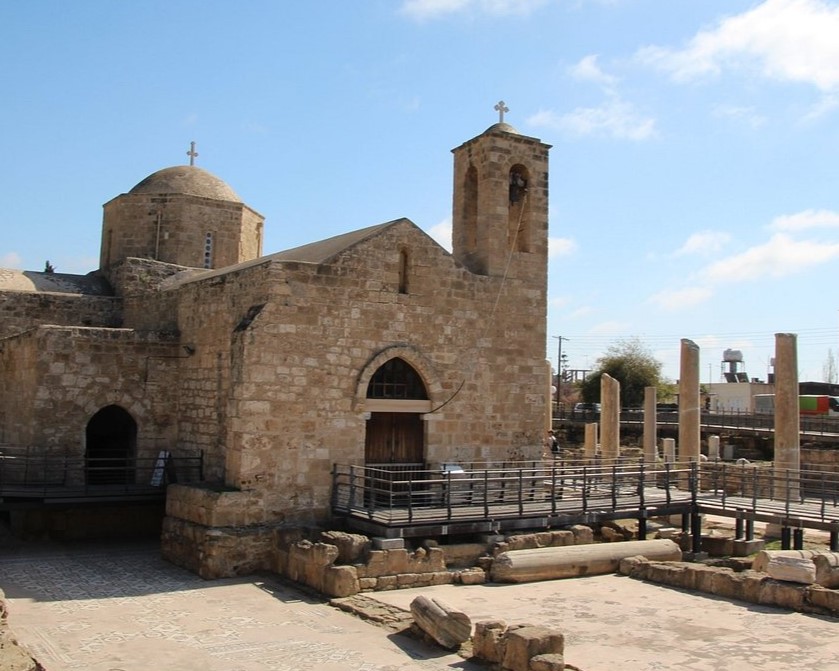
Panagia Chrysopolitissa Church and early Christian Basilica
Built in the 13th century over the ruins of the largest Early Byzantine basilica on the island.
Within the compound one can see St Paul’s Pillar,
where according to tradition Saint Paul was flogged before the Roman Governor Sergius Paulus was
converted to Christianity.
Theoskepasti Church
Theoskepasti means ‘Veiled by God’. According to tradition, a fog was sent by God
himself to protect the original church during the Arab raids.
The modern church was built in 1923.